
The perpetual student struggle is a tale as old as academia itself. Amidst lectures, exams, projects, and a burgeoning social life, a particularly irksome beast often rears its head: the handwritten assignment. Visions of cramped fingers, smudged ink, and late-night marathons fill many with dread. It’s a task that, while seemingly simple, devours precious time and energy, often leaving behind a trail of frustration and inconsistent penmanship. But what if there was a way to bypass the arduous manual labour without sacrificing the authentic, personal touch that handwritten work demands? What if technology could offer a sophisticated solution, a digital scribe ready to assist, making those looming deadlines a little less daunting?
Enter the world of the handwritten assignment maker – an innovation many students are discovering, and quite possibly, the best assignment helper you haven’t yet integrated into your academic arsenal. These aren’t just glorified font converters; we’re talking about intelligent tools designed to bridge the gap between digital efficiency and the unique aesthetic of human handwriting. They promise not just speed, but a level of customisation and realism that can transform how you approach your submissions, freeing up valuable hours to dedicate to deeper learning and critical thinking.
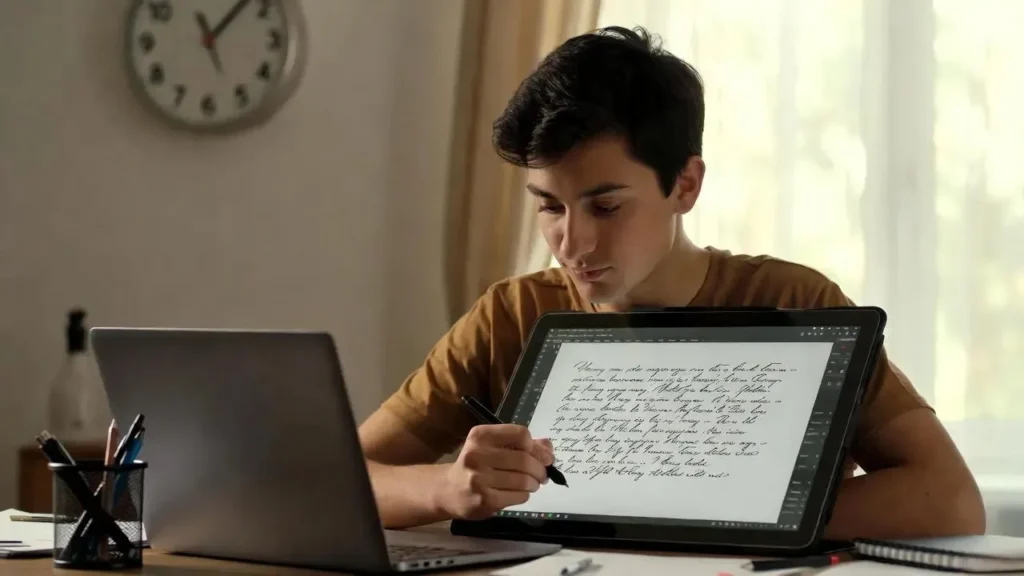
The Unseen Struggle: Why Handwritten Assignments Persist (and Perish)
For generations, handwritten assignments have been a cornerstone of educational pedagogy, particularly in India. The rationale is often rooted in deeply held beliefs about the learning process. Many educators argue that the act of physically writing helps in memory retention, fosters a deeper engagement with the material, and serves as a natural barrier against easy plagiarism. It’s seen as a direct demonstration of personal effort and commitment, an unfiltered window into a student’s diligence.
However, for the modern student, this tradition often translates into a significant burden. The sheer volume of content required in higher education means that producing pages upon pages of handwritten notes and assignments can quickly become overwhelming. Time, a student’s most precious commodity, is relentlessly consumed by the physical act of writing rather than the intellectual act of learning. The result? Fatigue, hand cramps, dwindling motivation, and sometimes, a hurried, illegible submission that undermines the very effort put in. This is where the appeal of an efficient, high-quality handwritten assignment maker becomes undeniable.
Enter the Digital Scribe: What Exactly is a Handwritten Assignment Maker?
At its core, a handwritten assignment maker is a sophisticated software or online tool that takes typed digital text and converts it into a visually authentic handwritten format. Think of it as a digital calligrapher, but one that can emulate a multitude of distinct writing styles, complete with the subtle imperfections and variations that characterise human penmanship.
These tools have evolved far beyond simple cursive fonts. Modern handwritten assignment makers leverage advanced algorithms, often incorporating elements of Artificial Intelligence (AI), to generate outputs that are remarkably realistic. They analyse textual input and render it as if it were written by hand on a chosen paper background, offering an unparalleled blend of convenience and credibility. Instead of spending hours meticulously copying notes, you can now input your researched and refined text, and let the digital scribe handle the aesthetic presentation.
Beyond the Basics: Features That Define a Superior Handwritten Assignment Maker
Not all handwritten assignment makers are created equal. A truly exceptional tool moves beyond mere text conversion, offering a suite of features that enhance realism, usability, and versatility.
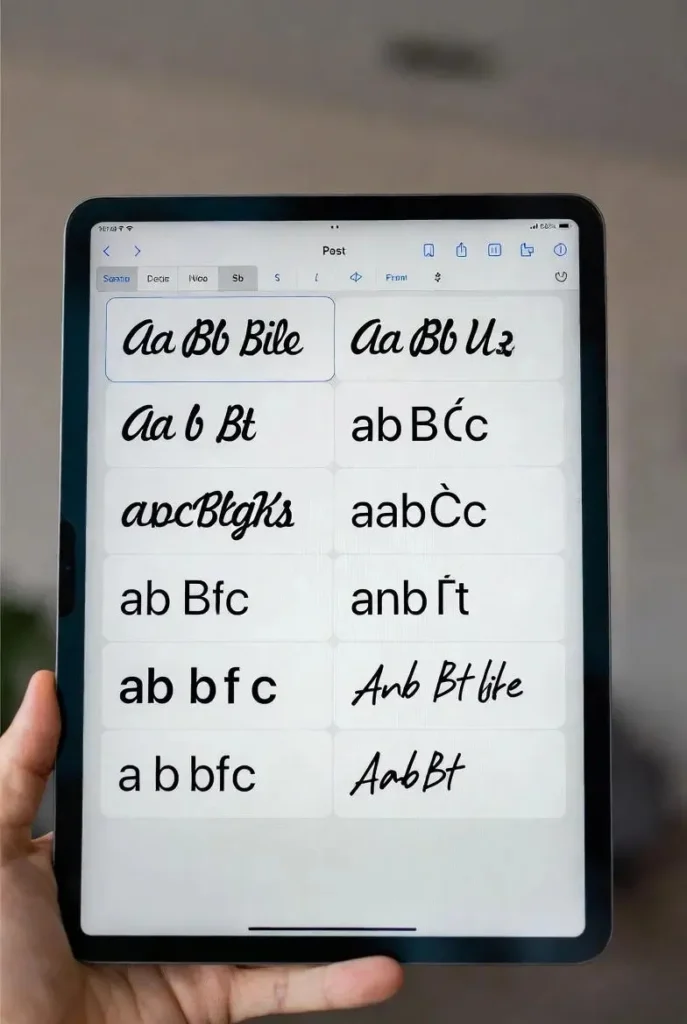
Customisation is King: The Art of Digital Penmanship
The hallmark of a top-tier handwritten assignment maker lies in its customisation options. It’s about replicating the nuanced individuality of human handwriting, not just generating a generic script.
- Diverse Font Styles: A superior tool will offer a vast library of handwriting fonts, ranging from neat and precise to more casual and flowing styles. Some even allow users to upload their own handwriting to be digitised and replicated, creating a truly personal touch. This variety is crucial, ensuring that your assignments don’t look identical to everyone else using the same tool. Many platforms, like HandtextAI, boast over 90 handwriting fonts, including options for cursive and print, with tools like iWeaver AI offering academic scripts and even specialised fonts for languages like Hindi.
- Ink Colours and Pen Thickness: The ability to choose from a spectrum of ink colours (blue, black, red, etc.) and adjust the pen thickness further adds to the authenticity. This small detail can make a significant difference in how “real” the generated handwriting appears.
- Paper Backgrounds and Textures: From lined and unlined sheets to graph paper, custom templates, and even simulated paper textures, these options allow you to match the assignment’s context perfectly. Some tools, like Inkt, even offer “branded sheets” and various paper textures, warp, and flash effects to make the output look like a physically photographed assignment.
- Margin Adjustments and Spacing Control: Granular control over top, bottom, and side margins, as well as line spacing and letter/word spacing, ensures that your digital handwriting fits perfectly on the chosen paper and mimics natural layout. This prevents a robotic, rigidly aligned appearance.
- Pressure Sensitivity and Randomisation: Advanced algorithms can simulate variations in pen pressure, leading to slightly thicker or thinner strokes, much like actual handwriting. Crucially, they can introduce subtle, natural variations in character formation, slant, and position. This “randomisation” is key to avoiding a repetitive, machine-generated look, making each character slightly unique, just as a human would write it. Tools like HandtextAI are noted for simulating natural handwritten text with genuine variations, while the Handwriter app uses AI algorithms for smart rotation to avoid a robotic feel.
Ease of Use and Accessibility
A powerful tool is only effective if it’s user-friendly and readily accessible.
- Intuitive UI/UX: The best platforms feature a clean, straightforward interface where text input, customisation, and output generation are seamless. Real-time previews are a massive plus, allowing you to see changes as you make them.
- Platform Compatibility: Whether it’s a web-based application, a desktop program, or a mobile app, broad compatibility ensures you can work from any device, anywhere. Many are accessible via web browsers, like texttohandwriting.in, which also boasts multi-language support and mobile-friendliness.
- Input and Output Flexibility: The ability to paste text directly, upload documents (PDF, DOCX, etc.), or even use an in-built editor is vital. Similarly, output options should include common formats like PDF and high-resolution image files (PNG, JPG), ready for printing or digital submission.
- Addressing “Handwritten Assignment Maker Near Me”: In a digital age, the concept of “near me” for a software tool translates directly to its online availability and ease of access. A top handwritten assignment maker is one that’s universally accessible from any location with an internet connection, eliminating the need for physical proximity. They are, in essence, “near you” wherever you have your device.
Performance and Precision: Speed Meets Quality
The efficiency and accuracy of the conversion process are critical for a tool designed to save time.
- Processing Speed: Rapid conversion of lengthy documents without compromising quality is a non-negotiable feature.
- Accuracy in Rendering: The tool should accurately convert all text, including special characters, formatting, and complex elements.
- Handling Complex Elements: Some advanced tools can even convert handwritten mathematical equations, diagrams, and figures, a significant advantage for STEM students. HandtextAI and Text-to-Handwriting are examples that support handwritten math equations and expressions.
- Error Correction/Preview: The ability to review and make minor adjustments before final download ensures a perfect output every time. Many tools offer live previews, making editing quick and hustle-free.
The Game-Changer: Benefits of Embracing a Digital Handwriter
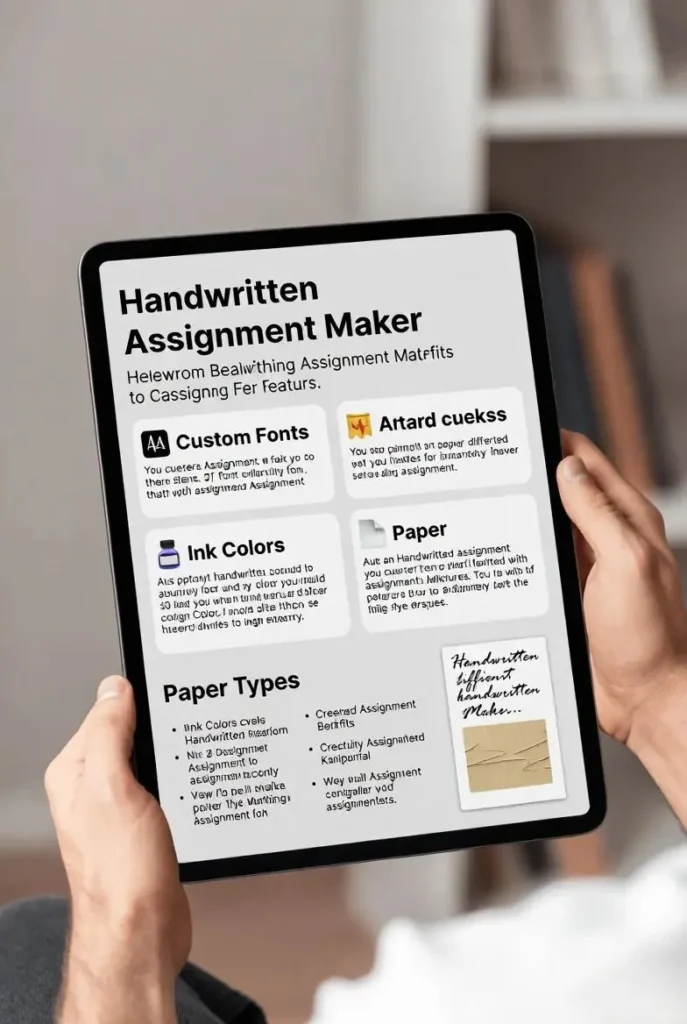
The advantages of using a sophisticated handwritten assignment maker extend far beyond mere convenience. They represent a fundamental shift in how students can manage their academic responsibilities and enhance their learning experience.
Time Management and Productivity Boost
This is perhaps the most immediate and impactful benefit. Imagine reclaiming hours spent meticulously copying notes for an assignment. By automating the transcription, students can:
- Free up valuable time: Redirect energy towards deeper research, understanding complex concepts, revising for exams, or even pursuing extracurricular activities.
- Meet deadlines effortlessly: Reduce the stress associated with impending submission dates, allowing for more strategic planning of academic tasks.
- Focus on intellectual growth: Shift focus from the repetitive physical act of writing to the more rewarding intellectual tasks of critical analysis, problem-solving, and creative thinking.
Consistency and Legibility
Not everyone possesses naturally neat handwriting, and even the best penmanship can deteriorate under pressure or fatigue. Handwritten assignment makers ensure:
- Uniform quality: Every page, every word, maintains a consistent, readable standard.
- Elimination of errors: Digital text input allows for spell-checking and grammar correction before conversion, leading to error-free submissions.
- Professional appearance: Presenting neat, legible work can positively impact how an assignment is perceived by educators.
Stress Reduction and Academic Well-being
The academic journey is often fraught with stress. These tools can play a significant role in mitigating it:
- Reduced procrastination: The daunting task of handwritten work often leads to procrastination. With an assignment maker, this barrier is significantly lowered.
- Improved mental health: Less time spent on tedious tasks means more time for rest, hobbies, and overall well-being.
- Enhanced confidence: Submitting polished, well-presented work can boost a student’s confidence in their academic output.
Accessibility for All
Handwritten assignment makers offer invaluable support for students with physical challenges or learning disabilities that affect fine motor skills. These tools can level the playing field, allowing all students to submit work in a format that meets requirements without physical strain or disadvantage.
Cost-Effectiveness (Indirectly)
While some premium tools have a subscription, the overall time saved can be translated into economic value. Furthermore, for those who might otherwise rely on professional transcribers or physical printing services, a digital tool can offer a more economical alternative in the long run.
Navigating the Ethical Labyrinth: When Does Help Become Cheating?
The advent of any powerful academic tool inevitably raises ethical questions. A handwritten assignment maker is no exception. The line between using technology as an aid and using it to circumvent academic integrity can be blurry, and it’s crucial for students to understand this distinction.
The core principle here is transparency and intellectual honesty. If an assignment explicitly requires you to physically write it to demonstrate engagement with the material or personal effort, then using a digital tool to simulate that handwriting could be considered unethical or even a form of academic dishonesty. Most educational institutions emphasise that AI and similar tools should be used to enhance learning, not to replace the student’s own intellectual engagement or create content without their input.
However, if the purpose of the handwritten submission is purely aesthetic – for instance, to present well-structured, legible notes that contribute to clarity without testing penmanship – then a handwritten assignment maker can be a legitimate productivity tool. The key is to ensure that the content is genuinely your own work, thoroughly researched, understood, and articulated by you. Using the tool for formatting and presentation, rather than generating the core ideas or text, aligns more closely with ethical guidelines.
Before using such a tool, always:
- Check institutional policies: Understand your university or college’s stance on AI-powered writing aids and submission formats.
- Prioritise learning: Ensure the tool isn’t replacing your own critical thinking, research, or understanding of the subject matter.
- Consider the intent: Is the “handwritten” requirement meant to test your physical writing, or simply to ensure a non-typed, personal presentation?
Ultimately, AI tools are considered powerful assistants that, when used responsibly, can significantly aid academic pursuits. “The key to ethical use of AI rests in transparency and the empowerment of individual voices, rather than its outright dismissal as a tool for ‘cheating’.” The danger lies in over-reliance on AI for rewriting or accepting AI edits without critical review, which can distort your intended meaning and compromise originality.
Choosing Your Digital Scribe: What to Look For (and Avoid)
With a growing number of handwritten assignment makers available, selecting the right one can be challenging. Here’s a guide to what to prioritise and what to approach with caution.
| Feature Category | Must-Have (Essential) | Good-to-Have (Enhanced Experience) | Avoid (Potential Red Flags) |
|---|---|---|---|
| Realism & Customisation | Multiple realistic handwriting fonts; adjustable ink colour/thickness; paper backgrounds; margin control. | AI-driven randomisation for subtle variations; ability to upload custom fonts; support for complex equations/diagrams. | Only one or two generic, clearly digital fonts; no customisation options for appearance. |
| Ease of Use | Intuitive interface; quick text input (paste/type); real-time preview. | Document upload (PDF, DOCX); mobile app availability; multi-language support. | Clunky interface; frequent bugs; no preview option. |
| Output & Compatibility | PDF and high-resolution image (PNG/JPG) export; cross-browser compatibility. | Offline export capabilities (for privacy/security). | Limited output formats; watermarks on free versions; poor resolution. |
| Privacy & Security | Clear privacy policy; data auto-deletion post-download. | Encrypted connections; no personal data storage. | Vague privacy statements; requests for unnecessary personal information; intrusive ads. |
| Cost | Free tier with decent features (for basic use). | Reasonable one-time purchase or subscription for advanced features. | Exorbitantly priced; hidden charges; forced auto-renewals without clear notification. |
| Support & Reputation | Active development/updates; responsive customer support. | Community forums; tutorials. | Abandoned projects; poor reviews; no customer support contact. |
When looking at specific tools, consider checking out options like HandtextAI, Handwriter, iWeaver AI, and texttohandwriting.in, as these are often mentioned in the context of advanced features and realistic output. User reviews often highlight how well these tools simulate natural strokes, variations, and even minor “manual errors” like page tilting for added realism.
The Future of Handwritten Assignments: AI and Beyond
The trajectory of handwritten assignment makers points towards even greater sophistication and integration. As AI continues to advance, we can anticipate:
- Hyper-Realistic AI: Future tools will likely offer even more nuanced emulation of human handwriting, potentially learning a user’s individual style with incredible accuracy from a few samples, and replicating it with truly undetectable variations. This might include dynamic pressure, varied stroke weights, and even subtle “hesitations” that are characteristic of human writing.
- Smart Integration with Educational Platforms: Imagine a seamless workflow where you can prepare your assignment content, select a handwriting style, and submit it directly through your learning management system (LMS), all within the same ecosystem. This would streamline the process even further.
- Augmented Reality (AR) Applications: While speculative, AR could potentially allow students to “write” their assignments in a virtual space using gestures, with the output rendered in a chosen handwritten style, offering a unique interactive experience.
- Ethical Frameworks: As these tools become more prevalent, there will be an increased emphasis on developing clear ethical guidelines and technological solutions to ensure they are used responsibly and support, rather than undermine, academic integrity. Discussions around transparency and proper attribution of AI assistance will become standard.
Conclusion
The handwritten assignment maker stands as a testament to technology’s relentless march forward, transforming even the most traditional academic tasks. For the diligent student navigating the demanding landscape of modern education, these tools are far more than a novelty; they are potent allies. They offer an unparalleled opportunity to reclaim valuable time, reduce stress, ensure consistent quality, and, crucially, re-focus energy on the intellectual demands of learning rather than the mechanical drudgery of transcription.
While the ethical considerations surrounding their use are paramount and must always be approached with transparency and integrity, the benefits for legitimate academic support are undeniable. From customisable fonts that capture personal flair to sophisticated AI that mimics the authentic imperfections of human script, these digital scribes are refining the very definition of “handwritten” work. If you’re looking to optimise your study routine, elevate the presentation of your assignments, and truly leverage technology for academic advantage, then a high-quality handwritten assignment maker is undoubtedly the powerful tool you might not be using yet, but absolutely should be. Embrace the future of assignment submission – intelligently, efficiently, and authentically.
Frequently Asked Questions
1. Are handwritten assignment makers ethical to use?
The ethics of using handwritten assignment makers depend heavily on the specific context and your institution’s policies. If the assignment explicitly requires your personal physical act of writing to assess effort, penmanship, or learning retention, then using a digital tool to simulate handwriting might be considered unethical. However, if the requirement for “handwritten” is purely for presentation (e.g., to distinguish from typed work) and the content is entirely your original thought and research, then using such a tool for formatting can be an ethical time-saver. Always prioritise academic integrity, ensure the content is your own work, and check your university or college’s guidelines on AI and digital aids.
2. Can teachers detect if an assignment was made using a handwritten assignment maker?
Modern handwritten assignment makers are becoming increasingly sophisticated, incorporating AI to introduce subtle variations in letter formation, slant, and spacing that mimic human imperfections. Some even offer features like simulated pressure, ink bleed, and paper textures. While very basic tools might produce easily detectable “robotic” handwriting, advanced ones can generate output that is extremely difficult to distinguish from genuine human handwriting. However, educators are also becoming more aware of these tools. The focus should be less on “getting away with it” and more on ethical use and maintaining the authenticity of your intellectual work.
3. Are there free handwritten assignment makers available?
Yes, many free handwritten assignment makers are available online and as mobile applications. Websites like texttohandwriting.in offer completely free services with various customisation options, including multiple languages like Hindi and English, and the ability to download as PDF or PNG. Several apps also provide free fonts and basic features. While free versions may have limitations (e.g., fewer fonts, watermarks, character limits), they can be excellent for basic needs and to test the functionality before considering a paid, feature-rich alternative.
4. How does a handwritten assignment maker actually work?
A handwritten assignment maker typically works by taking your typed digital text as input. This text is then processed by algorithms, often powered by AI, which map each character to a corresponding handwritten glyph from a pre-defined font library. Advanced tools introduce random variations in the appearance, position, and rotation of these glyphs to mimic natural handwriting. You can then customise parameters like ink colour, pen thickness, paper background, margins, and spacing. Finally, the tool renders the entire document as a high-resolution image or PDF file, making it appear as if it was written by hand.
5. Is searching for “handwritten assignment maker near me” relevant for these tools?
Given that most effective handwritten assignment makers are digital tools – either web-based platforms or mobile applications – the concept of “near me” isn’t physically relevant. These tools are accessible online from anywhere with an internet connection, regardless of your geographical location. Instead of “near me,” a more pertinent search would focus on features, reviews, pricing, and specific functionalities (e.g., “best online handwritten assignment maker for math equations” or “free handwritten assignment maker with Hindi fonts”).
6. Can these tools handle diagrams or complex equations?
Some advanced handwritten assignment makers do support the conversion of complex elements like mathematical equations and diagrams. Tools like HandtextAI and Text-to-Handwriting are specifically noted for their ability to generate handwritten math equations and expressions. Others might allow you to insert image files for diagrams. However, this feature is not universal, and its quality can vary. If your assignments frequently involve complex scientific or mathematical notation, look for tools that explicitly advertise and demonstrate robust support for such elements.