
Policy Speech Topics: In the grand arena of public discourse, where ideas clash and futures are forged, few instruments wield as much power as a well-crafted policy speech. It’s more than just a presentation; it’s a meticulously designed blueprint for change, a plea for progress, a call to action. Yet, amidst the cacophony of daily news cycles and fleeting trends, the challenge isn’t merely to speak, but to speak about something truly significant. The real test lies in selecting and developing policy speech topics that cut through the noise, capture hearts and minds, and ultimately drive tangible impact.
Too often, aspiring speakers fall into the trap of addressing superficial issues or rehashing tired arguments, their messages lost in the ether. The problem isn’t a lack of passion, but a lack of strategic foresight in identifying topics that resonate deeply, address genuine societal needs, and offer viable pathways to improvement. This isn’t just about delivering information; it’s about advocating for a better tomorrow. This guide will equip you with a robust framework to identify, refine, and champion policy speech topics that not only matter but also possess the inherent potential to ignite meaningful change and leave a lasting legacy.

The Core Purpose of a Policy Speech: Beyond Just Talking
At its heart, a policy speech is an argument for a specific course of action, a proposal for how society or a particular group should address a challenge. It’s inherently prescriptive, moving beyond mere description to advocate for a solution. Understanding this foundational purpose is the first step toward mastering the art of topic selection.
Defining “Policy”: What Are We Really Discussing?
Before we delve into topics, let’s clarify what “policy” entails in this context. Policy refers to a set of principles, rules, and objectives that guide decisions and actions, usually formulated by a government, organization, or institution. It’s a deliberate plan of action to guide decisions and achieve rational outcomes. When you deliver a policy speech, you’re not just discussing a problem; you’re proposing a structured, implementable response to it. This distinction is crucial. Without a clear policy angle, your speech risks becoming an informative exposé rather than a catalyst for change. It must articulate not only what is wrong, but also what should be done about it and how.
The Urgency of Relevance: Why Your Topic Selection Is Paramount
In an age of information overload, relevance is currency. A policy speech topic that genuinely matters connects with your audience’s lived experiences, their aspirations, or their fears. It taps into the public consciousness, addressing issues that are either currently debated, widely felt, or critically overlooked. Choosing a relevant topic ensures your audience leans in, rather than tunes out. It demonstrates an understanding of the contemporary landscape and positions you as a thoughtful contributor to ongoing conversations. Irrelevant topics, no matter how eloquently presented, will fail to move the needle.
Driving Change vs. Informing: Knowing Your Ultimate Goal
While every policy speech contains elements of information, its ultimate aim is distinct from a purely informative speech. An informative speech seeks to educate, to broaden understanding, and to present facts neutrally. A policy speech, conversely, seeks to persuade, to motivate, and to advocate for a specific policy change. Your goal is not just for the audience to understand the issue, but to agree with your proposed solution and potentially even act upon it. This distinction profoundly influences not only your topic choice but also your rhetorical strategy, the evidence you select, and your call to action. If your aim is solely to inform, you might pick a topic like “The History of Public Education Funding.” If your aim is to drive policy change, you’d choose “Reforming Public Education Funding to Achieve Equitable Outcomes.”
Unearthing “Main: Policy Speech Topics”: Where to Begin Your Search
The quest for impactful policy speech topics begins with diligent exploration and keen observation. It’s about being a student of the world, attuned to its challenges, its debates, and its untapped potential.
The Pulse of Society: Current Events and Public Discourse
Perhaps the most intuitive starting point is the daily news cycle and ongoing public discussions. What are people talking about? What issues are dominating headlines, social media feeds, and community meetings? These are often the fertile grounds for main policy speech topics.
- Brainstorming from Headlines: Scan major news outlets, both local and national. Look for recurring themes related to healthcare, economic inequality, environmental crises, technological regulation, or social justice. Are there legislative debates underway? Are there recent court rulings sparking controversy?
- Social Issues and Community Concerns: Look closer to home. What challenges are facing your local community, state, or nation? High school students might consider issues impacting their immediate environment, like local park maintenance, school lunch programs, or mental health resources for youth. These ground-level issues often reflect larger systemic problems.
- Public Opinion and Polling Data: What are the prevailing sentiments among different demographics? Polling data can reveal areas of broad concern or significant division, indicating topics ripe for persuasive discourse.

Personal Conviction and Expertise: Your Unique Lens
While external events provide a wealth of material, your most potent advantage often lies within yourself. Your personal experiences, values, and areas of expertise can provide a unique and compelling perspective, leading to truly original oratory topics.
- Leveraging Your Background: Have you worked in a particular industry? Do you have personal experience with a specific social issue? Your direct engagement provides authenticity and depth that generic research cannot replicate. A former teacher, for instance, might speak with unparalleled authority on education policy.
- Passion and Purpose: What issues genuinely stir your emotions and motivate you to act? Passion is infectious and will imbue your speech with a compelling energy. If you care deeply about animal welfare, explore policies related to animal agriculture or pet adoption laws.
- Untapped Knowledge: Do you possess specialized knowledge in a niche area? Perhaps you’ve extensively researched a specific historical event, a scientific breakthrough, or an economic theory. How can this knowledge be leveraged to propose a forward-looking policy?
Academic and Research Frontiers: Data-Driven Discoveries
For those who lean towards evidence-based arguments, the academic and research world offers a treasure trove of policy speech ideas. This realm moves beyond anecdotal evidence to rigorous data, studies, and expert analysis.
- Exploring Studies and Reports: Consult reports from think tanks, government agencies (e.g., Congressional Budget Office, EPA, CDC), non-profits, and universities. These often highlight emerging problems, evaluate existing policies, and propose new solutions backed by extensive research.
- Emerging Trends: What scientific, technological, or social trends are poised to reshape our future? Policies often lag behind innovation. Consider topics related to artificial intelligence regulation, genetic editing ethics, or the future of work in an automated economy. These offer opportunities for groundbreaking policy proposals.
- Peer-Reviewed Journals: Dive into academic databases. While dense, these sources provide the most authoritative and thoroughly vetted information, offering sophisticated insights into complex policy challenges.
Historical Context and Future Projections: Learning from the Past, Shaping the Future
Sometimes, the most pressing main policy speech topics are those that have been overlooked or mismanaged historically, or those that represent looming future challenges.
- Identifying Unresolved Issues: Are there historical injustices that still require policy redress? Are there past policy failures that offer lessons for future approaches? Examining the long tail of certain issues can reveal persistent problems requiring novel solutions.
- Potential Crises: What future challenges are we neglecting today? Climate change, aging populations, cybersecurity threats, and global pandemics are all examples of issues that require proactive policy development, not just reactive measures. Speaking on these topics positions you as a visionary leader.
From Broad Stroke to Sharpened Focus: Narrowing Down Your Policy Speech Ideas
Once you have a general area of interest, the critical next step is to refine it into a specific, actionable, and defensible policy proposal. A vague topic is a recipe for a vague speech.
The Art of the Specific: Why “Education Reform” Isn’t Enough
“Education Reform” is a vast ocean. It encompasses everything from curriculum changes to funding models, teacher training to school infrastructure. To create an impactful policy speech, you must zoom in.
- Example: Instead of “Education Reform,” consider “Implementing Universal Pre-Kindergarten Programs in Low-Income Urban Areas.” This topic is specific, identifies a clear demographic, and suggests a concrete policy action.
- The “So What?” Test: For any broad topic, ask yourself, “So what, specifically, about this?” Keep asking until you arrive at a precise, manageable issue that can be adequately addressed within the scope of your speech.
Identifying a Clear Problem and a Tangible Solution
Every compelling policy speech is built on the foundation of a clearly articulated problem and a well-defined, actionable solution. Without both, your speech lacks direction and persuasive power.
- Problem Statement: Your speech must vividly describe the problem, its scope, its impact, and why it demands attention. Use data, anecdotes, and expert testimony to illustrate its urgency.
- Policy Proposal (Solution): This is the core of your policy speech. You must outline a specific, practical plan to address the problem. This isn’t just about wishing for change; it’s about presenting a blueprint for how that change can occur. Be prepared to detail the mechanisms, resources, and expected outcomes of your proposed policy.
- Feasibility and Benefits: A strong policy proposal also addresses the feasibility of its implementation (can it actually be done?) and outlines the concrete benefits it would bring.
Audience Analysis: Who Are You Trying to Persuade or Inform?
Your audience dictates not only your delivery style but also how you frame your persuasive policy speech topics. A speech to a group of environmental activists will differ significantly from one delivered to a chamber of commerce, even if the underlying issue is the same.
- Demographics and Values: Understand their age, background, political leanings, and core values. What do they care about? What language do they respond to?
- Existing Knowledge and Attitudes: How much do they already know about your topic? Are they generally supportive, opposed, or neutral? Your speech must meet them where they are. If they’re hostile, you’ll need to focus more on building common ground and establishing credibility. If they’re amenable, you can dive deeper into the specifics of your solution.
- Desired Outcome: What do you want your audience to do after your speech? Vote for a specific candidate? Support a particular bill? Change their personal behavior? This desired outcome should inform every aspect of your topic selection and presentation.
Crafting a Persuasive Policy Speech: Strategies for Impact
Once you’ve zeroed in on your main policy speech topic, the work shifts to building a compelling argument. This isn’t just about having good ideas; it’s about presenting them in a way that resonates and persuades.
The Ethos, Pathos, Logos Framework: Ancient Wisdom, Modern Application
Aristotle’s rhetorical triangle remains an indispensable tool for crafting powerful persuasive policy speeches.
- Ethos (Credibility): Establish your expertise and trustworthiness. Why should your audience listen to you on this topic? This can come from personal experience, extensive research, or by citing credible sources. Demonstrate a deep understanding of the issue’s complexities.
- Pathos (Emotion): Connect with your audience’s feelings, values, and beliefs. Policy issues often have a human face. Share stories, use vivid language, and evoke empathy to make the problem tangible and its solution desirable. However, avoid overly manipulative or melodramatic appeals.
- Logos (Logic): Provide a clear, rational argument supported by evidence. This is the backbone of any policy speech. Present data, statistics, expert testimony, and logical reasoning to demonstrate why your proposed policy is the most effective and rational solution.
Evidence is King: Data, Statistics, Expert Testimony
A policy speech without robust evidence is merely an opinion. Strong, verifiable evidence lends authority and persuasiveness to your claims.
- Data and Statistics: Use reliable, up-to-date figures from reputable sources to quantify the problem and project the benefits of your solution. For example, “Childhood obesity rates have risen by X% in the last decade, leading to increased healthcare costs and long-term health issues.”
- Expert Testimony: Quote or paraphrase recognized authorities in the field. This adds weight to your arguments and bolsters your ethos.
- Case Studies and Examples: Illustrate your points with real-world examples of where the problem has manifested or where similar policies have been successfully implemented.
- How to Present Compelling Evidence Without Overwhelming: Don’t just list facts. Integrate them seamlessly into your narrative, explaining their significance. Use visuals if appropriate (though not in the text output). Vary the types of evidence you use to maintain engagement.
Anticipating Counterarguments: Strengthening Your Stance
A truly expert speaker doesn’t shy away from opposing viewpoints but addresses them head-on. By anticipating and refuting counterarguments, you demonstrate a thorough understanding of the issue and strengthen your own position.
- Identify Common Objections: What are the most likely criticisms of your proposed policy? Cost, feasibility, unintended consequences, infringement on freedoms?
- Preemptive Rebuttal: Incorporate responses to these objections directly into your speech. Show that you’ve considered the downsides and have a plan to mitigate them. For example, “While some may argue that this policy is too costly, our analysis demonstrates that the long-term savings in healthcare and productivity far outweigh the initial investment.”
The Power of Narrative: Storytelling in Policy
Numbers and data are crucial, but stories make policy relatable. Humanize the issue by weaving in narratives that illustrate the problem’s impact on individuals or communities.
- Personal Anecdotes: If appropriate, share a brief personal story that connects you to the issue.
- Vignettes of Affected Individuals: Describe the experience of someone impacted by the problem you’re addressing. This evokes empathy and makes abstract policy discussions concrete.
- Future Vision: Paint a picture of the positive future your proposed policy will create. What will life be like if your solution is implemented?
Exploring Diverse Policy Speech Avenues: Beyond the Traditional
While many immediately think of political or economic issues, the scope of main policy speech topics is far broader, encompassing virtually every facet of human endeavor.
Policy in the Realm of Sports: “Informative Speech Topics Sports” as a Catalyst for Discussion
Sports, often seen as mere entertainment, are deeply intertwined with policy, ethics, and societal values. Exploring informative speech topics sports can lead to powerful policy discussions.
- Youth Sports Safety: Policies around concussion protocols, age-appropriate training, and coaching certifications. Should there be national standards for youth sports safety?
- Athlete Welfare and Rights: Policies addressing mental health support for athletes, fair compensation for college athletes, or the protection of athletes from abuse.
- Funding for Collegiate Programs: Debates around Title IX, equitable resource allocation, and the financial sustainability of non-revenue sports.
- Gender Equity in Sports: Policies ensuring equal opportunities and pay for female athletes and coaches.
- Sports Betting Regulation: The ethical and economic implications of legalized sports betting, and policies to prevent match-fixing or problem gambling.
- International Sports Policy: Discussions around human rights issues in host countries for major sporting events, or policies concerning doping.
These topics allow for speeches that can inform, persuade, and propose concrete policy changes within a relatable and often passionate domain.
Environmental Policy: Sustainability and Our Future
The climate crisis and environmental degradation present some of the most urgent main policy speech topics of our time.
- Renewable Energy Transition: Policies promoting solar, wind, and geothermal energy; carbon taxes; or subsidies for green technologies.
- Conservation and Biodiversity: Policies for protecting endangered species, preserving natural habitats, or regulating resource extraction.
- Waste Management and Circular Economy: Policies encouraging recycling, reducing single-use plastics, or fostering closed-loop production systems.
- Water Scarcity and Management: Policies addressing drought, pollution of water sources, or equitable water distribution.
Economic Policy: Growth, Equity, and Innovation
Economic policy impacts everyone. These topics often require a deep dive into complex financial and market dynamics.
- Minimum Wage and Income Inequality: Policies around living wages, progressive taxation, or wealth redistribution.
- Affordable Housing: Policies for rent control, zoning reform, or public housing initiatives.
- Job Creation and Workforce Development: Policies for vocational training, infrastructure investment, or small business support.
- Financial Regulation: Policies to prevent market crashes, protect consumers, or curb corporate malfeasance.
Social Policy: Justice, Health, and Community Well-being
Social policies directly affect the quality of life and fairness within a society.
- Healthcare Access and Affordability: Policies for universal healthcare, prescription drug price controls, or mental health service expansion.
- Criminal Justice Reform: Policies addressing mass incarceration, police accountability, or rehabilitation programs.
- Immigration Reform: Policies concerning border security, pathways to citizenship, or refugee resettlement.
- Education Equity: Policies aimed at closing achievement gaps, funding disadvantaged schools, or promoting diverse learning environments.
Technological Policy: Navigating the Digital Frontier
The rapid pace of technological change necessitates constant policy adaptation, offering a wealth of main policy speech topics.
- Artificial Intelligence Ethics and Regulation: Policies addressing algorithmic bias, data privacy in AI, or the future of work in an AI-driven economy.
- Internet Privacy and Data Security: Policies for consumer data protection, cybersecurity standards, or the regulation of social media platforms.
- Net Neutrality: Policies ensuring equitable access to internet services.
- Digital Divide: Policies aimed at bridging the gap in internet access and digital literacy in underserved communities.
The “Original Oratory Topics” Advantage: Standing Out in a Crowded Field
While many policy speeches address well-trodden ground, the ability to identify and articulate original oratory topics can elevate your message from simply good to truly unforgettable. Originality isn’t about inventing a completely new problem, but rather approaching an existing one with a fresh perspective or proposing an innovative solution.
The Value of Novelty: Why Originality Captivates
In a world saturated with information, novelty grabs attention. An original topic or a unique angle on a familiar one immediately signals to your audience that they are about to hear something fresh and potentially groundbreaking. It positions you as an independent thinker, not just a regurgitator of popular opinions. This intellectual curiosity and courage to explore uncharted territory can create a lasting impression and stimulate genuine dialogue.
Deep Dive Research: Uncovering Untapped Angles
Originality often stems from exceptionally deep and focused research. While others might skim the surface, you delve into the nuances, the caveats, the interconnections that others miss.
- Interdisciplinary Connections: Explore how insights from one field (e.g., psychology) can inform policy in another (e.g., urban planning).
- Longitudinal Studies: Examine how a problem has evolved over decades, identifying patterns or shifts that suggest new policy interventions.
- Global Best Practices: Look beyond your immediate context. How are other countries or regions addressing similar problems? Can their successful (or unsuccessful) policies be adapted?
Personal Connection: Injecting Your Unique Voice
An original topic often carries the imprint of the speaker’s unique journey, worldview, or personal experience. This isn’t just about sharing an anecdote; it’s about filtering a universal problem through the lens of your individual understanding. Your unique perspective adds authenticity and a distinct voice that resonates more powerfully than a generic overview.
The Power of Interdisciplinary Thinking: Connecting Seemingly Unrelated Fields
Perhaps the most potent source of original policy ideas lies in the ability to draw connections between seemingly disparate fields. This interdisciplinary approach can reveal innovative solutions that are invisible to those who remain siloed within traditional categories.
- Example: Consider the intersection of tech policy and mental health. An original oratory topic might be “Developing Policy Frameworks for Algorithmic Transparency in Social Media to Mitigate Adolescent Mental Health Decline.” This isn’t just about tech, or just about mental health; it’s about their dynamic interplay and the policy vacuum that exists at their convergence.
Developing Your Policy Argument: A Step-by-Step Guide
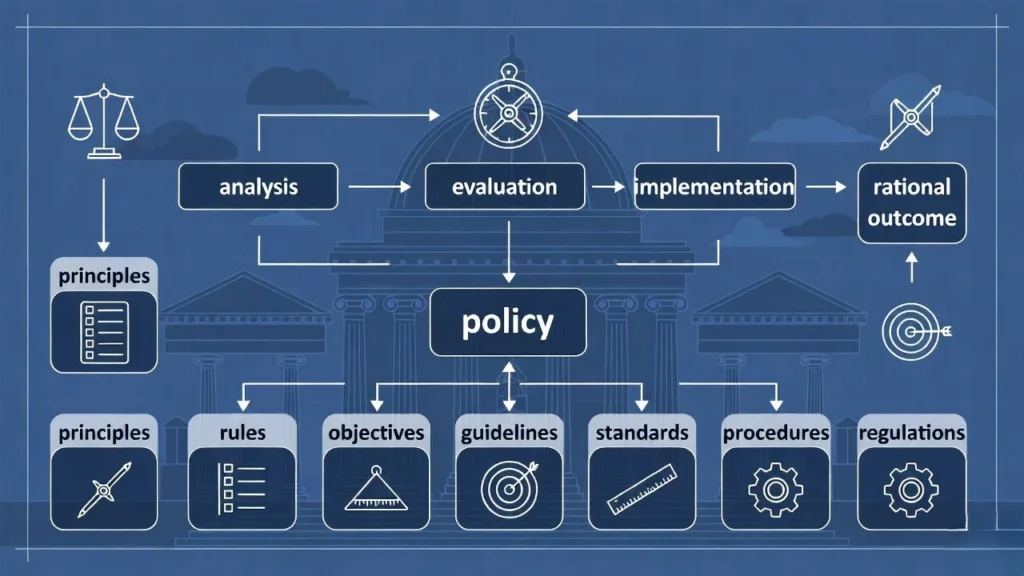
Once your topic is refined and your approach determined, the rigorous work of building your argument begins. This is where your policy speech transforms from an idea into a structured, persuasive force.
| Aspect | Weak Policy Speech Approach | Strong Policy Speech Approach |
|---|---|---|
| Topic Selection | Broad, vague, unoriginal (e.g., “Healthcare”) | Specific, timely, often original (e.g., “Implementing a Single-Payer System for Pediatric Mental Healthcare”) |
| Problem Definition | General statements, lacks data, assumes audience understanding | Vividly illustrates problem with specific data, statistics, and real-world impacts. |
| Solution Proposed | Vague hopes, wishes, or generic calls for “more funding” | Detailed, actionable, and feasible policy blueprint; addresses implementation mechanisms. |
| Evidence Use | Anecdotal, outdated, or from questionable sources | Robust, current, from credible sources (academic, governmental, reputable NGOs); varied types. |
| Counterarguments | Ignores opposing views or dismisses them without substance | Acknowledges and systematically refutes key counterarguments with evidence and logic. |
| Call to Action | Ambiguous, passive, or missing | Clear, specific, measurable, and achievable (e.g., “Contact your representative to support Bill X”). |
| Ethos/Credibility | Relies solely on speaker’s opinion or passion | Built through research, expertise, acknowledgment of complexity, and ethical reasoning. |
Research Methodologies: From Scholarly Articles to Grassroots Surveys
The depth and breadth of your research will directly correlate with the strength of your policy argument.
- Scholarly Articles and Peer-Reviewed Journals: These provide the most rigorously vetted information and deep theoretical frameworks. Utilize academic databases like JSTOR, Google Scholar, or institutional libraries.
- Government Reports and Data: Agencies often publish extensive data, analyses, and evaluations of existing policies. Look for reports from national and local government bodies.
- Think Tanks and Non-Governmental Organizations (NGOs): Many organizations specialize in policy research and advocacy, publishing reports, white papers, and policy briefs.
- Interviews with Experts: Directly engage with academics, practitioners, or community leaders who have firsthand knowledge of your issue.
- Grassroots Surveys and Community Feedback: For local policy issues, gathering data directly from affected communities can provide invaluable, authentic insights.
Structuring Your Argument: Thesis, Body, Counterarguments, Conclusion
A well-structured argument guides your audience logically from the problem to your proposed solution.
- Introduction:
- Hook: Grab attention with a compelling statistic, anecdote, or rhetorical question.
- Background: Briefly contextualize the problem.
- Problem Statement: Clearly articulate the issue your policy addresses and its urgency.
- Thesis Statement: State your proposed policy solution and what you aim to achieve. This is the core argument you will prove.
- Body Paragraphs (Problem Exploration):
- Dedicated sections to detail various facets of the problem.
- Each section should have a clear topic sentence, supporting evidence (data, examples, expert quotes), and an explanation of its significance.
- Use transition words and phrases to ensure smooth flow between points.
- Body Paragraphs (Solution/Policy Proposal):
- Clearly outline your proposed policy. Break it down into manageable components.
- Explain how it would work, who would implement it, and what resources it would require.
- Present the benefits of your policy, backed by evidence.
- Address potential challenges in implementation and how they would be mitigated.
- Body Paragraphs (Counterarguments and Rebuttals):
- Acknowledge the most significant opposing viewpoints or potential objections to your policy.
- Systematically refute these counterarguments with logical reasoning and evidence, strengthening your own position.
- Conclusion:
- Summary: Briefly restate the problem and your proposed policy (rephrase your thesis).
- Reinforce Benefits: Reiterate the positive impact of your policy.
- Call to Action: Tell your audience what you want them to do (vote, advocate, support, learn more). Make it specific and achievable.
- Concluding Thought: Leave your audience with a memorable, impactful statement that reinforces the importance of your topic.
Language and Delivery: Polishing Your Message
Even the most brilliant policy proposal can fall flat without effective language and delivery.
- Clarity and Precision: Use clear, unambiguous language. Avoid jargon where simpler terms suffice, but don’t shy away from necessary technical terms if you explain them.
- Vivid Imagery: Use descriptive language to paint a picture for your audience, making abstract concepts more concrete.
- Rhetorical Devices: Employ rhetorical questions, repetition, alliteration, and analogies to make your speech more memorable and persuasive.
- Confident Delivery: Practice your speech until you are fluent and confident. Maintain eye contact, vary your tone and pace, and use gestures effectively to emphasize points. Your non-verbal communication is just as crucial as your words.
Impacting Change: Beyond the Podium
The true measure of a policy speech’s success isn’t just the applause it garners but the change it inspires. The work doesn’t end when you step off the podium.
The Call to Action: Making It Clear and Achievable
A powerful call to action is the bridge between rhetoric and reality. It’s the moment you empower your audience to become agents of the change you’re advocating.
- Specific: Don’t just say “Do something.” Tell them exactly what to do. “Contact your state representative by Friday to express your support for Bill XYZ.”
- Achievable: The action should be something the audience can realistically accomplish.
- Measurable (if possible): If your speech is part of a larger campaign, link the action to a measurable goal.
- Motivating: Remind them of the stakes and the positive impact their action will have.
Sustaining Momentum: Follow-up and Advocacy

For your policy speech to have lasting impact, it often requires sustained effort beyond the initial delivery.
- Provide Resources: Share links to relevant organizations, petitions, or legislative information.
- Engage in Q&A: Be prepared to answer questions and continue the discussion. This shows commitment and allows for deeper engagement.
- Ongoing Advocacy: If appropriate, continue to advocate for your policy through written articles, social media, or direct engagement with policymakers. A single speech is often just one step in a longer advocacy journey.
Measuring Success: How Do You Define “Impact”?
Defining what “impact” looks like for your particular policy speech is essential for evaluating its effectiveness.
- Short-Term Impact: Did your audience express greater understanding or agreement? Did they take the immediate call to action (e.g., sign a petition, visit a website)?
- Medium-Term Impact: Did public opinion shift? Did relevant stakeholders engage in further discussion or action?
- Long-Term Impact: Was the policy ultimately adopted or influenced? Did it lead to tangible improvements in the problem you addressed?
Understanding these different levels of impact allows you to set realistic goals and celebrate successes, even small ones, along the way.
Conclusion
Mastering policy speech topics that truly matter is an art form, a blend of intellectual rigor, empathetic understanding, and strategic communication. It demands that you move beyond superficial observations to identify root problems, craft viable solutions, and articulate them with clarity and conviction. From the initial spark of an idea to the sustained effort required for real-world impact, every step is crucial.
By diligently exploring current events, leveraging your unique perspective, delving into robust research, and meticulously structuring your arguments, you can transform a mere topic into a powerful force for progress. Whether you’re advocating for a groundbreaking environmental regulation, championing overlooked social justice issues, or proposing innovative solutions in sports policy, remember that your words possess the potential to shape futures. Choose your main policy speech topics wisely, develop them thoughtfully, and deliver them with purpose. In doing so, you don’t just speak; you inspire, you persuade, and you ignite the change that truly matters.
Frequently Asked Questions
1. What makes a policy speech topic “matter”?
A policy speech topic “matters” when it addresses a significant problem that impacts a considerable number of people, is timely and relevant to current societal discourse, and proposes a clear, actionable solution. It should aim to improve conditions, right wrongs, or prevent future harm, reflecting a genuine need for change and offering a pathway to achieve it.
2. How do I choose between an informative and a persuasive policy speech?
The choice hinges on your primary objective. If your goal is simply to educate your audience about a policy issue without advocating for a specific course of action, an informative speech is appropriate. However, if your aim is to convince your audience to