
How to Write a Perfect Assignment Introduction: The blank page stares back, mocking. You’ve got a mountain of research, a compelling argument brewing in your mind, but the first few lines? They feel like the most formidable obstacle. Many students, even seasoned academics, grapple with the assignment introduction. It’s more than just an opening paragraph; it’s the initial handshake, the first impression, and arguably the most critical component in setting the stage for academic success. A poorly constructed introduction can bury brilliant ideas, while a meticulously crafted one can elevate even a good assignment to an exceptional one.
This isn’t just about avoiding a bad grade; it’s about establishing your authority, demonstrating a clear understanding of the task, and engaging your reader – your professor – from the very first sentence. In the competitive academic landscape, where professors might sift through dozens of papers, a captivating introduction is your secret weapon. This comprehensive guide will unravel the mystery of crafting the perfect assignment introduction, providing you with a step-by-step blueprint to ensure your work not only meets but exceeds expectations, leaving a lasting, positive impression on your professors.
Why Your Introduction is Non-Negotiable: The First Impression Factor
Think of your assignment introduction as the overture to a grand symphony. It sets the mood, introduces the main themes, and prepares the audience for the experience to come. In academia, this “overture” is critical. It’s the first glimpse your professor gets into your thought process, your writing quality, and your grasp of the subject matter.
Setting the Stage: Purpose of an Introduction
The primary purpose of an introduction is multi-faceted. It serves to introduce the topic, provide necessary background information, define key terms, and clearly state the assignment’s purpose or argument. Essentially, it’s a guide, a map that tells your reader where you’re going and why it’s worth the journey. A well-written introduction should offer a brief overview of your topic’s domain, its significance, and its scope. It acts as a “road map” to the entire assignment, outlining the ideas you will present.
The Professor’s Lens: What They Look For

Professors are not just looking for content; they’re assessing your critical thinking, organizational skills, and ability to communicate professionally. They want to see that you’ve grasped the assignment prompt, understand the relevant context, and have a clear, concise argument. A strong introduction reassures them that you are on the right track and that the subsequent pages will be worth their time. They look for clarity, focus, and an indication that you know what you’re discussing, why it matters, and how you intend to discuss it. The introduction should also convey your unique perspective or stance on the topic.
Beyond the Grade: Cultivating Academic Credibility
Beyond the immediate impact on your grade, a powerful introduction helps cultivate your academic credibility. It signals that you are a thoughtful, organized, and confident writer. This early demonstration of expertise can subtly influence how your professor perceives the rest of your work, fostering trust in your analysis and arguments. It shows you’ve taken the assignment seriously, dedicating time to present a polished and professional piece from the outset.
Deconstructing the “Perfect” Introduction: Core Components
While the exact structure might vary slightly depending on the assignment type and specific institutional guidelines, a perfect introduction generally comprises several key components working in harmony. Think of it as an inverted pyramid, moving from broad to specific, ultimately narrowing down to your core argument.
The Hook: Capturing Attention from the First Word
The very first sentence, or “hook,” is your chance to grab the reader’s attention and make them want to continue reading. It’s not about being overly dramatic or sensational, especially in academic writing, but about sparking curiosity and relevance.
Types of Hooks (with examples):
- Anecdote or Short Story: A brief, relatable narrative that illustrates the core issue. “The dusty archive, filled with forgotten voices, often holds the keys to understanding our present dilemmas.”
- Startling Statistic or Fact: A surprising piece of data that highlights the importance or scale of your topic. “Globally, over 80% of urban populations breathe air exceeding WHO guideline limits, making air quality a silent killer in modern cities.”
- Thought-Provoking Question: A rhetorical question that encourages the reader to ponder the topic’s implications. “Can technological advancements truly bridge the widening socio-economic gap, or do they merely exacerbate existing inequalities?”
- Relevant Quote: A powerful quote from an authority figure or relevant text that sets the tone. “As Socrates famously posited, ‘The unexamined life is not worth living,’ a sentiment that resonates deeply with the perpetual quest for knowledge in modern philosophy.”
- Background Information/Historical Context: Beginning with a general statement that places your topic within a broader context. “The discourse surrounding climate change, once relegated to fringe environmental movements, has evolved into a central tenet of international policy and scientific research over the past five decades.”
- Bold Statement/Declaration: A strong, confident claim that immediately states your stance. “The notion of absolute objectivity in journalism is not only a myth but a dangerous illusion that undermines public trust.”
Tips for Crafting Effective Hooks:
- Relevance is Key: Ensure your hook directly relates to your main topic and thesis. A disconnected hook confuses the reader.
- Keep it Concise: Hooks should be brief, typically one to three sentences.
- Avoid Overly Broad Statements: Steer clear of clichés like “Since the dawn of time…” or generic statements that could apply to any topic.
- Consider Your Audience and Tone: A research paper might benefit from a statistic, while a humanities essay could use a compelling anecdote.
Background Context: Bridging the Knowledge Gap
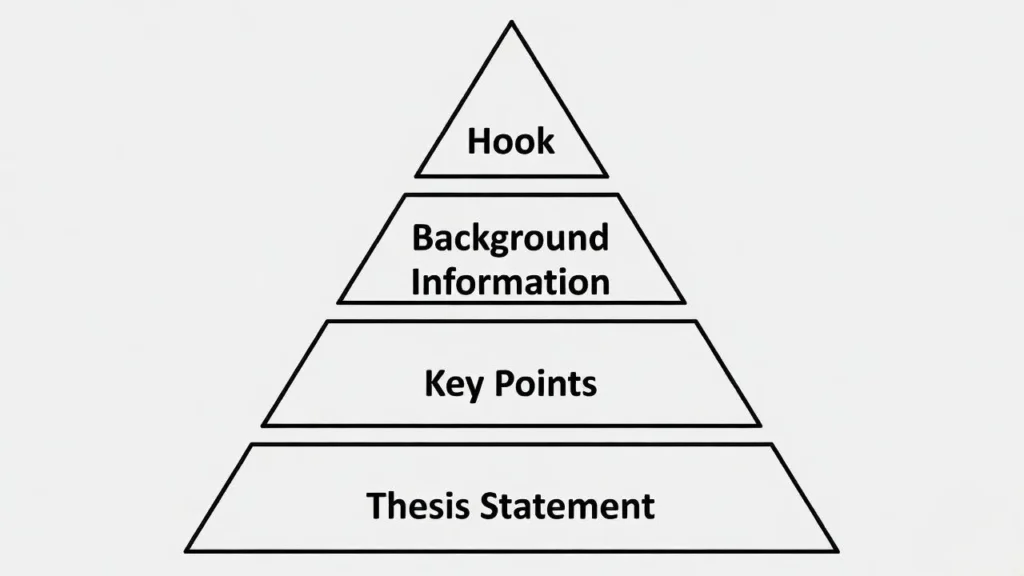
Once you’ve hooked your reader, provide essential background information and context. This section bridges the gap between the general hook and your specific argument. It ensures your professor understands the foundational knowledge necessary to comprehend your paper.
- Why it’s crucial: It establishes the broader academic conversation or real-world scenario your assignment contributes to. It avoids making assumptions about the reader’s prior knowledge.
- How much detail to include: Introduce only essential information without going into excessive detail; save deeper explanations for the body paragraphs. Focus on providing just enough context for the reader to understand your thesis and the problem you’re addressing.
The Problem Statement/Research Question: Defining the Core Challenge
Many academic assignments, especially research papers, revolve around addressing a specific problem, issue, or research question. Clearly articulating this in your introduction is vital.
- Clearly articulating the issue: State the problem or question your assignment seeks to explore or answer. This could be a gap in existing research, a contentious debate, or a practical challenge. “Despite extensive research on renewable energy, the socio-economic barriers to widespread adoption in developing nations remain critically under-examined.”
- Its importance for the assignment’s direction: This statement provides a clear direction for your paper, justifying your research and analysis. It shows your professor that you understand the assignment’s core objective and its significance.
Scope and Limitations (Optional but Powerful)
For longer assignments, or those in technical fields, briefly outlining the scope and any limitations can demonstrate a mature understanding of your topic.
- What will be covered, what won’t: Explicitly state what your paper will focus on and, if necessary, what it will not address. This manages expectations and prevents your professor from anticipating content you never intended to provide. For example, “This paper will analyze the economic impacts of AI integration in the manufacturing sector of the United States, explicitly excluding broader ethical or social implications.”
The Thesis Statement: Your Assignment’s Guiding Light
The thesis statement is the backbone of your entire assignment. It’s typically a concise, one or two-sentence declaration that presents your main argument, claim, or the central point you will prove or discuss. It’s usually placed near the end of your introduction.
- What makes a strong thesis:
- Specific and Focused: Avoid vagueness. It should clearly define the scope of your paper.
- Arguable/Debatable: It’s not a mere statement of fact, but a claim that others could reasonably disagree with, requiring evidence and analysis to support it.
- Concise: Short and to the point, without unnecessary jargon.
- Supportable: You must be able to provide evidence and research to back up your claim.
- Expresses One Main Idea: Focus on a single central point to avoid an unfocused paper.
- Placement and clarity: Position it strategically, typically at the end of the introduction, to ensure it guides the reader from the outset. It acts as a “roadmap” for your paper.
- Difference between thesis and topic sentence: A thesis statement governs the entire essay, while a topic sentence introduces the main idea of a single paragraph.
Roadmap/Outline: Guiding the Reader
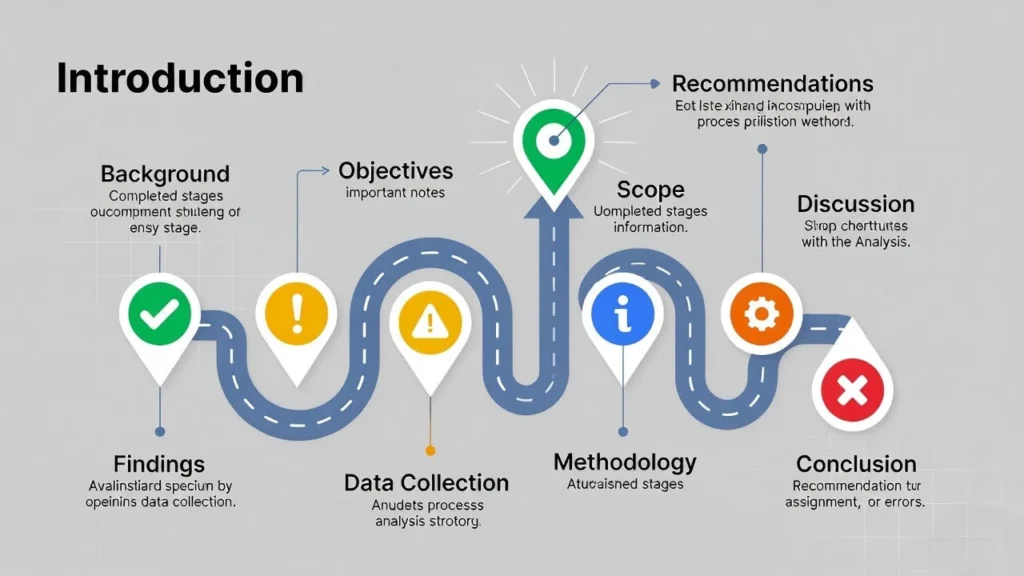
Finally, offer a brief roadmap or overview of your assignment’s structure. This tells your professor how you will support your thesis or address your research question.
- Briefly mentioning what the assignment will discuss: Indicate the main sections or key arguments you will cover, in the order they will appear. “This essay will first examine the historical context of the debate, then analyze the primary arguments for and against intervention, and finally propose a new framework for policy development.”
- Benefits of a roadmap: It creates a logical flow, prepares the reader for what’s to come, and demonstrates your organizational skills.
The “Secret Blueprint” – A Step-by-Step Guide to Crafting Excellence
Many students approach the introduction as the very first thing they write. While a working draft can be helpful, the “secret” to a truly perfect introduction often lies in writing it (or at least refining it significantly) after you’ve developed your main arguments. This allows your introduction to accurately reflect the content and direction of your entire paper.
Step 1: Understand Your Assignment Inside Out
Before writing a single word, thoroughly deconstruct the assignment prompt.
- Deconstructing the prompt: Identify keywords, action verbs (e.g., analyze, compare, evaluate, discuss), and any specific requirements or constraints (e.g., word count, sources, formatting). Misinterpreting the brief is a common pitfall.
- Identifying keywords: Understand the core concepts you need to address.
- Understanding expectations: What kind of argument or analysis is your professor looking for? What is the purpose of the assignment?
Step 2: Brainstorm and Research Your Topic Thoroughly
Engage deeply with your topic. This isn’t just about gathering information; it’s about forming your own insights.
- Gathering initial ideas: What are the main points you want to make? What evidence do you have?
- Identifying key arguments: Even if nascent, start to think about the core claims you will defend.
Step 3: Outline Your Main Arguments First
This is where the “secret” truly begins to unfold. Instead of forcing an introduction from scratch, outline your body paragraphs first.
- Writing the body paragraphs before the intro (or at least outlining them): By knowing what you’re actually going to argue and the evidence you’ll use, your introduction can be far more precise and compelling. You’ll have a clear sense of the paper’s scope and direction.
- Benefits of outlining: It ensures coherence, prevents straying off-topic, and provides a solid foundation for your thesis.
Step 4: Craft Your Thesis Statement
With your main arguments outlined, you can now formulate a robust thesis statement that accurately represents your paper’s core argument.
- Revisit and refine: Your initial working thesis might need adjustment to align perfectly with your developed arguments. Ensure it’s specific, arguable, and concise.
Step 5: Develop a Compelling Hook
Now that you know your thesis, select a hook that seamlessly leads into it.
- Tailoring the hook to the topic: Choose a hook type that best suits your topic and the academic context. A shocking statistic for a scientific paper, an anecdote for a reflective essay, or a historical overview for a historical analysis.
- Ensuring connection: The hook should naturally transition into your background information, not feel like a disconnected opening.
Step 6: Provide Essential Background Information
Flesh out the context that your reader needs to understand your topic and its relevance.
- Contextualizing the topic: Explain the broader discussion or historical context relevant to your assignment. Define any crucial terms your audience might not immediately understand, but do so concisely.
- Leading to the problem: This background should naturally lead to the specific problem or question your paper addresses.
Step 7: Introduce Your Problem Statement/Research Question
Clearly articulate the specific issue or question your assignment aims to investigate or resolve.
- Clearly articulate the gap or issue: This demonstrates a sharp focus and justifies the purpose of your paper.
Step 8: Detail Your Assignment’s Roadmap
Outline the structure of your paper.
- Briefly outline the structure: Inform the reader what they can expect in the body paragraphs, guiding them through your argument’s progression. Avoid simply listing points; instead, weave them into a coherent narrative.
Step 9: Review, Refine, and Polish
The introduction is often the most revised part of an assignment.
- Checking for clarity: Is every sentence easy to understand? Are there any ambiguous phrases?
- Conciseness: Remove any unnecessary words or jargon. Every sentence should serve a purpose.
- Grammar and flow: Proofread meticulously for errors. Ensure smooth transitions between sentences and ideas. Read it aloud to catch awkward phrasing.
- Alignment with the body: Crucially, reread your entire paper and then your introduction. Does the introduction still accurately reflect what you’ve actually written in the body? Adjust if necessary.
Common Pitfalls to Avoid in Your Introduction
Even with a clear blueprint, certain mistakes can undermine an otherwise strong introduction. Being aware of these common traps can help you sidestep them.
Overly Broad or Vague Statements
Starting with sweeping generalizations or uninformative claims like “Throughout history, humans have always sought knowledge” is a common error. These statements don’t offer any specific insight into your paper’s topic and fail to engage the reader. Instead, be specific and directly relevant.
Starting with Definitions (Unless absolutely necessary)
While defining complex or ambiguous terms is sometimes necessary, beginning your introduction with a dictionary definition is generally discouraged. If a term is crucial and unfamiliar to your audience, integrate its definition smoothly into your background information, rather than using it as a bland opening.
Plagiarism and Lack of Originality
Every part of your assignment, including the introduction, must be original. Avoid copying phrases or ideas directly from sources without proper attribution. Your introduction should reflect your own interpretation and approach to the topic.
Excessive Length or Too Much Detail
An introduction should be concise. Typically, it comprises 5-10% of your total word count. Don’t cram too much background information or delve into detailed arguments that belong in the body paragraphs. Its role is to introduce, not to extensively explain.
Poorly Constructed Thesis Statements
A weak thesis statement, one that is vague, not arguable, or merely a statement of fact, can derail your entire paper. Ensure your thesis is a clear, specific claim that you will support throughout your assignment.
Grammatical Errors and Typos
First impressions matter. Grammatical errors, typos, and awkward phrasing in your introduction can immediately signal a lack of care and professionalism. Proofread meticulously.
Advanced Strategies for Standing Out

To truly elevate your introduction from good to exceptional, consider these advanced strategies.
The Art of Revision: Why the Introduction is Often Written Last
As previously emphasized, many expert writers find it easier and more effective to write a working introduction first, then complete the body of the paper, and finally return to the introduction for a thorough revision. This iterative process ensures that your introduction perfectly aligns with your developed arguments and conclusions. Your initial ideas might evolve during the writing process, and revising the introduction last guarantees it accurately reflects your final paper.
Seeking Feedback: A Fresh Pair of Eyes
Even the best writers benefit from external review. Ask a peer, tutor, or writing center expert to read your introduction (and ideally, your entire paper). A fresh pair of eyes can spot ambiguities, suggest stronger phrasing, or identify areas where clarity could be improved. They can tell you if your hook is engaging, if your thesis is clear, and if the introduction sets appropriate expectations.
Learning from Examples: Analyzing Effective Introductions
Read exemplary academic papers in your field. Pay close attention to how established scholars craft their introductions. Analyze their hooks, how they provide context, articulate their problem statements, and present their theses and roadmaps. This analytical reading can help you internalize effective strategies and adapt them to your own writing style.
Conclusion
Crafting a perfect assignment introduction is not a mystical art but a learnable skill, a strategic process that significantly impacts your academic performance. It’s the moment you establish your credibility, capture your professor’s attention, and lay the groundwork for a compelling argument. By understanding its core components – the compelling hook, relevant background, precise problem statement, focused thesis, and clear roadmap – you gain a powerful blueprint for success.
Remember the “secret”: while you might draft an initial introduction, the truly brilliant ones are often refined and polished after the main body of the assignment is complete. This iterative approach ensures that your introduction flawlessly reflects the depth and direction of your entire paper. Avoid common pitfalls like vagueness or excessive detail, and always strive for clarity, conciseness, and engagement. By embracing these principles and dedicating time to thoughtful revision and refinement, you won’t just write an introduction; you’ll craft a gateway to an assignment that not only earns high marks but genuinely impresses your professors, solidifying your reputation as a skilled and insightful academic writer.
Frequently Asked Questions
Q1: How long should an assignment introduction be?
A: Generally, an introduction should constitute about 5-10% of your total assignment’s word count. For a 2000-word essay, this would mean 100-200 words. However, there’s no absolute rule, and it can vary based on the complexity of the topic and the overall length of the paper. For very short assignments, it might be just one paragraph, while longer research papers could have several paragraphs. The key is to include all necessary components without providing excessive detail.
Q2: Can I write my introduction last?
A: Yes, in fact, many experienced writers and academic experts recommend writing a draft introduction early to guide your writing, but then returning to it and revising it thoroughly, or even writing the final version, after you have completed the body of your assignment. This ensures your introduction accurately reflects the arguments and conclusions presented in your paper, making it more focused and cohesive.
Q3: What’s the difference between a thesis statement and a topic sentence?
A: A thesis statement is the main argument or central point of your entire paper, typically found at the end of your introduction. It governs the direction and scope of your whole assignment. A topic sentence, on the other hand, is the main idea of a single paragraph within the body of your paper. It introduces what that specific paragraph will discuss and how it relates back to your overall thesis.
Q4: Should I include citations in my introduction?
A: You should generally avoid heavy citation in your introduction. While it’s acceptable to cite a statistic, a direct quote, or a key piece of background information from an external source if it serves as your hook or essential context, the introduction should primarily present your original framing of the topic and your thesis. Save detailed engagement with scholarly literature and extensive citations for your body paragraphs.
Q5: What if my assignment doesn’t have a clear “problem statement”?
A: Not all assignments will explicitly require a “problem statement” in the traditional sense, especially if they are descriptive or analytical rather than argumentative or research-focused. However, even in such cases, your introduction should still establish the purpose or objective of your assignment. This might involve outlining the specific aspects of a topic you will explore, the analytical approach you will take, or the question your essay seeks to answer. Think of it as defining the “gap” your essay fills, even if that gap is simply a comprehensive analysis of a particular subject.
Q6: How do I make my introduction engaging for a technical subject?
A: For technical or scientific subjects, an engaging introduction often leverages precise, impactful information. Consider using a compelling statistic that highlights the relevance or challenge of your topic, a brief overview of a significant historical development in the field, or posing a crucial research question that your paper will address. Clarity and directness are paramount. Avoid jargon where simpler language suffices, or define technical terms concisely if they are central to understanding. The goal remains the same: to show the reader why your specific topic is important and worthy of their attention.
Q7: Is it okay to use personal anecdotes in an introduction?
A: This depends heavily on the assignment and your discipline. For personal essays, reflective pieces, or certain humanities assignments, a brief and relevant personal anecdote can be a highly effective hook, making your introduction relatable and engaging. However, for formal research papers, scientific reports, or assignments requiring an objective tone, personal anecdotes are generally inappropriate and should be avoided. Always consider your audience, the assignment’s purpose, and your professor’s expectations before incorporating personal elements.